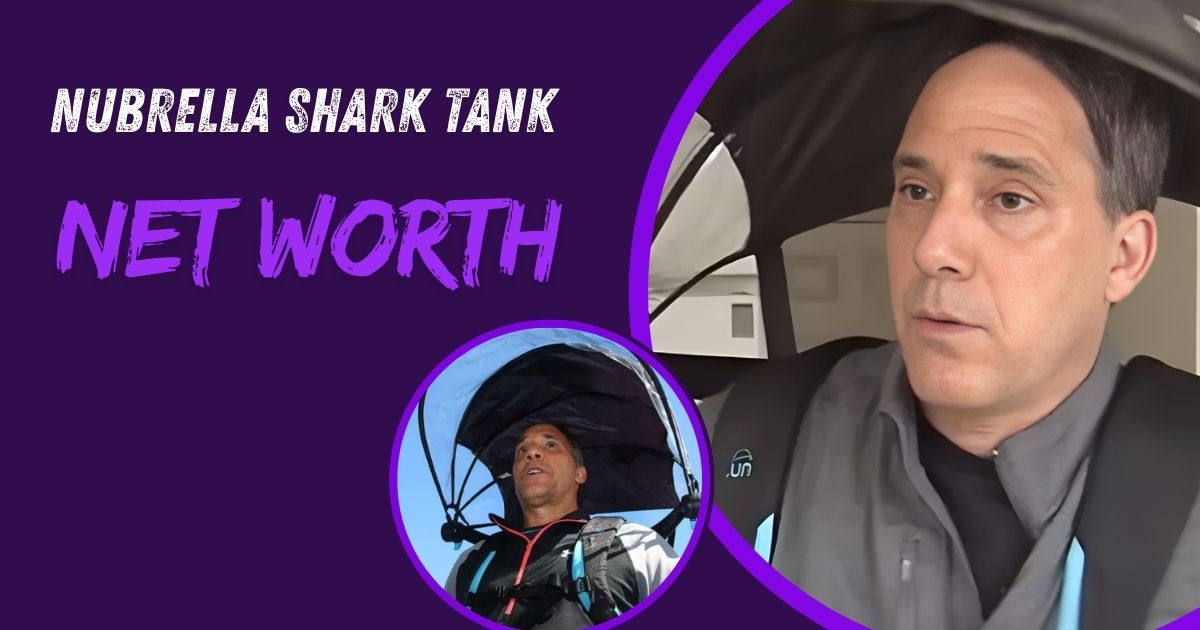
Ever fought with an umbrella during a storm? Alan Kaufman inventor did something revolutionary about it. His hands-free umbrella invention appeared on Shark Tank Season 1 products back in 2010. The bubble-shaped wearable umbrella design caught everyone’s attention immediately. Today, people still ask: what is Nubrella Shark Tank net worth in 2025?
The answer involves patents, innovation, and persistent entrepreneurship. This unique Shark Tank inventions story goes beyond sales figures. It reveals how one person challenged three millennia of umbrella design. Nubrella net worth 2025 reflects intellectual property value more than active revenue. The journey includes dramatic television moments, Shark Tank legal disputes, and tragic endings. Yet the brand maintains surprising value even today.
Nubrella Shark Tank Net Worth in 2025
What is Nubrella Shark Tank net worth in 2025? Current estimates place the value between $1-2 million. This Nubrella business valuation comes primarily from patented umbrella technology rather than active sales. The company stopped production after Alan Kaufman’s death. However, intellectual property valuation keeps the brand financially relevant. Patent-driven brand value represents the bulk of assets.
Umbrella design patents drive most of the current worth. The umbrella brand assets include trademarks, manufacturing rights, and design protections. Is Nubrella intellectual property for sale? Potentially, yes, the right buyer could acquire these dormant assets. Does Nubrella still have patents? Active legal protections remain in place through standard patent terms. Future umbrella patent licensing could generate significant revenue streams.
The Nubrella Shark Tank update reveals a complex financial picture. Peak annual revenue reached $1 million by 2021. However, umbrella manufacturing costs remained stubbornly high throughout production. The umbrella licensing model became more viable than direct sales. This strategic pivot preserved value without ongoing expenses. How much is Nubrella worth today? Patent portfolios and brand recognition maintain substantial worth. The post Shark Tank success stories category includes this company’s unique position.
| Financial Metric | 2025 Estimated Value |
| Total Net Worth | $1M – $2M |
| Patent Value | $500K – $1M |
| Brand Assets | $300K – $500K |
| Peak Revenue (Historic) | $1.2M annually |
| Licensing Income | $0.5M estimated |
What Is Nubrella?
Nubrella breaks away from traditional umbrella design completely. It wraps around your body like a transparent bubble. The wearable rain protection keeps both hands free during storms. Rain, wind, and sunlight cannot penetrate this shield. What made Nubrella different from regular umbrellas? Everything about functionality changed with this invention.
Alan Kaufman inventor created this hands-free umbrella invention to solve daily problems. Traditional umbrellas haven’t changed much in thousands of years. The transparent umbrella canopy attaches securely through a lightweight harness. It protects your head and shoulders completely. Users can walk, cycle, carry items, or push strollers. The hands-free canopy system revolutionized personal weather protection possibilities.
The design might look strange to some people initially. But functionality proves more important than visual appearance concerns. Wearable technology innovation prioritizes practical benefits over fashion considerations. The storm-resistant umbrella works when traditional ones fail miserably. Is Nubrella better than traditional umbrellas? For hands-free situations, absolutely yes, nothing else compares functionally. The outdoor gear inventions category gained something genuinely groundbreaking here.
Read More: María Bernarda Giménez | The Quiet Heart Behind a Football Family
The Idea Behind Nubrella
Kaufman noticed how traditional umbrellas fail in strong winds. New York City customers entered his Cingular stores drenched. They struggled juggling phones, bags, and broken umbrellas daily. This retail to inventor story began with simple observations. Why do hands-free umbrellas fail? Actually, the concept doesn’t fail, traditional adoption patterns do.
Working in retail gave him unique customer insight perspective. He watched people fight with umbrellas during storms repeatedly. A better solution seemed obvious, but nobody had created it. The need for hands-free rain gear became crystal clear. Who invented the Nubrella umbrella? Alan Kaufman, a retail store owner who saw problems firsthand.
His goal combined comfort, function, and innovative design thinking. Building a wearable shelter products solution allowed users to move freely. The concept challenged umbrella innovation history spanning three thousand years. Innovation requires questioning why things work a certain way. The umbrella invention story here demonstrates entrepreneurial courage beautifully. Consumer product innovation starts with recognizing what frustrates people daily.
How Nubrella Works?
The transparent dome sits on shoulders using a harness. It folds back like a hood when not needed. The design locks securely in place during active use. Polycarbonate shell and flexible frame resist strong wind forces. How does a hands-free umbrella work? The shoulder-mounted system distributes weight evenly and comfortably.
Full transparency allows clear visibility even in heavy rainstorms. Users see everything around them without visual obstruction. The design prevents inversion issues common with regular umbrellas. Wind-resistant umbrella technology makes it superior to traditional designs. How wind resistant is Nubrella? The canopy withstands gusts that destroy conventional umbrellas instantly.
Each innovation adds significant value to the intellectual property. Small improvements create meaningful differences in user experience. These design elements contribute to Nubrella net worth 2025 substantially. Patented umbrella technology covers unique features and manufacturing methods thoroughly. What is Nubrella made of? Polycarbonate shells, flexible frames, and adjustable harness systems. The collapsible wearable umbrella stores easily when weather improves.
Key Features Include:
- Hands-free operation through shoulder harness attachment system
- Wind-resistant polycarbonate shell that doesn’t flip inside out
- 360-degree rain protection covering head and shoulder areas
- Transparent material providing unobstructed vision in all conditions
- Collapsible design for easy storage when not needed
- Lightweight construction for comfortable extended wear
- Adjustable fit accommodating different body sizes comfortably
From Shark Tank to the World Stage
What year was Nubrella on Shark Tank? Alan Kaufman pitched Nubrella in Season 1, 2010. He asked for two hundred thousand dollars for equity. The pitch called it the world’s first hands-free umbrella invention. Did Daymond John invest in Nubrella? Initially yes, Daymond John and Kevin Harrington offered together.
The deal required fifty-one percent equity for both sharks. Alan accepted despite giving up majority control of his company. Did Kevin Harrington invest in Nubrella? The agreement fell apart after filming concluded completely. Why did the Nubrella Shark Tank deal fail? Kevin found the price point wrong for failed infomercial products strategy. Daymond couldn’t secure distribution channels either successfully.
National television exposure still brought tremendous benefits to the brand. Instant recognition created a massive surge in sales immediately. How did Shark Tank exposure affect Nubrella? Thousands of units sold within just a few months. International distributors from Asia and Europe requested partnership opportunities. Major media outlets covered the story extensively, including Ellen and CNN. Was Nubrella successful after Shark Tank? Initially, yes, sales exploded from television exposure alone.
Nubrella’s Evolution Over Time
Kaufman refined the product redesign evolution several times after Shark Tank. Later versions became lighter, sleeker, and more user-friendly overall. Marketing expanded beyond rain to include sun and wind. What is Canope umbrella? The 2020 rebranding effort using the Nubrella technology. Why did Nubrella rebrand? Fresh positioning could potentially attract new customers.
Retail momentum slowed down after a few years of sales. Umbrella manufacturing costs remained high, and consumer adoption challenges proved difficult. The company kept its patent portfolio active and protected. This strategy maintains Nubrella net worth 2025 above one million. Patent-driven brand value became the primary asset class instead.
Umbrella patent licensing became the new business model moving forward. Other manufacturers could use the design under licensing agreements. This pivot preserved value without requiring active production facilities. Strategic decisions like this protect long-term umbrella brand assets effectively. Did Nubrella ever make money? Yes, revenue reached $1M annually by 2021. How much revenue did Nubrella make? Peak years generated substantial sales before production ceased.
Evolution Timeline:
- 2010: Original Shark Tank appearance and massive media coverage
- 2011-2015: Product refinements and design improvements implemented continuously
- 2016: Shark Tank legal disputes with Sony Pictures settled quietly
- 2020: Rebranding to Canope with continued online sales efforts
- 2022: Founder Alan Kaufman net worth maintained through IP assets
Nubrella’s Market Impact
Nubrella never became a household name like major brands. But it influenced wearable technology innovation and outdoor gear inventions significantly. The design inspired similar ideas across multiple industries creatively. Sportswear, portable shade, and protective weather gear borrowed these concepts. Umbrella market disruption doesn’t require mass adoption to matter culturally.
Independent inventors rarely challenge products unchanged for three millennia. Kaufman proved that innovation can come from unexpected sources. His courage to think differently created lasting outdoor innovation influence. Nubrella business valuation reflects this cultural impact value substantially. Why didn’t Nubrella become popular? Visual appearance and consumer adoption challenges prevented mainstream acceptance patterns.
The brand symbolizes creative umbrella entrepreneurship story at its finest. It showed that one person can reimagine everyday objects. Success isn’t only measured in sales numbers or profits. Legacy and influence matter just as much long-term historically. What is Nubrella’s legacy? Proving that questioning convention creates new industry possibilities. Discontinued Shark Tank products often maintain surprising cultural relevance despite sales failures.
Industry Influence:
- Inspired hands-free canopy system thinking in outdoor gear design
- Influenced drone protection and portable shade equipment designs significantly
- Changed consumer expectations for rain protection technology innovation possibilities
- Demonstrated viability of wearable shelter products concepts commercially
- Created new category for thinking about personal protective equipment
Personal Life of Alan Kaufman
Alan Kaufman inventor preferred keeping his personal life very private. His product gained worldwide fame, but he stayed quiet. Media attention focused on Nubrella rather than personal details. He managed retail stores before becoming an inventor full-time. What happened to Alan Kaufman? He passed away in November 2022 unexpectedly.
Kaufman owned several Cingular Wireless stores in New York City. Unlike modern founders, he didn’t market his personal brand. His quiet approach differed from today’s entrepreneur celebrity culture. The focus remained on product innovation rather than personality. Alan Kaufman net worth derived from his invention’s intellectual property value.
How much did Alan Kaufman invest? Over nine hundred thousand dollars personally initially. This massive financial gamble showed his belief in the concept. He risked everything to bring his vision to life. Few inventors commit so much of their own money. The umbrella entrepreneurship story demonstrates remarkable conviction and courage. His death left the business without succession plans established.
| Personal Detail | Information |
| Full Name | Alan Kaufman |
| Age | Early 60s at passing |
| Previous Career | Retail store owner/manager |
| Known Residence | New York and Florida |
| Personal Investment | $900,000+ |
| Death | November 2022 |
Early Life and Nubrella Highlights
Every invention starts with a simple observation moment daily. Alan Kaufman inventor breakthrough came from watching retail customers suffer. His journey explains how Nubrella Shark Tank net worth in 2025 came together. Retail management taught him to spot problems and solutions. Observation beats speculation for understanding customer needs genuinely.
Kaufman invested over nine hundred thousand dollars personally initially. This massive financial gamble showed his belief in the concept. He risked everything to bring his vision to life. Few inventors commit so much of their own money. The retail to inventor story reveals uncommon dedication to innovation.
Early success came through word-of-mouth marketing alone originally. How many Nubrellas were sold? Sales reached thirteen thousand units across eighty-six countries globally. Media coverage brought both praise and criticism equally predictably. Kaufman embraced feedback and used it to improve designs. Failed Shark Tank deals didn’t stop his momentum initially at all.
Key Milestones:
- Managed multiple Cingular Wireless retail stores successfully
- Invested $900K personal funds into product development
- Sold 13,000 units across 86 countries initially
- Appeared on Shark Tank Season 1 products in 2010
- Reached $1M annual revenue by 2021
From Retail to Rain Gear
Daily customer interactions at Cingular Wireless stores provided insights. Pattern recognition revealed people entering completely drenched regularly. Observing customers juggling phones, bags, broken umbrellas constantly sparked ideas. This repetitive problem triggered innovative thinking process naturally. Retail to inventor story trajectories often begin with simple observations.
The thought emerged that a better solution must exist. No one had challenged the basic umbrella design seriously. Kaufman decided to create what the market desperately needed. His retail background informed practical design decisions throughout development. Understanding customer frustration beats theoretical product development approaches always.
Commitment drove him to invest nearly one million dollars. He believed strongly enough to risk his entire savings. This dedication forms the foundation of the current brand value. Personal investment stories add credibility to Nubrella business valuation substantially. The umbrella invention story demonstrates how conviction transforms observations into innovations.
Version 1 Launch and Media Storm
Prototypes entered distribution in the United States and abroad. Sales quickly reached thirteen thousand units in multiple countries worldwide. Real interest came from cyclists, delivery workers, and professionals. The target market appreciated practical benefits over fashion concerns. Wearable rain protection solved real problems for specific user groups.
Public reaction split between genius innovation and strange appearance. Critics mocked the bubble design while users praised functionality. Kaufman accepted criticism and improved the design based on feedback. Media outlets covered the story, creating massive brand awareness. How did Shark Tank exposure affect Nubrella? Television amplified everything, both praise and skepticism equally.
Major shows like Good Morning America featured Nubrella prominently. Ellen DeGeneres discussed it on her popular talk show. National newspapers and magazines wrote detailed feature articles extensively. This media attention drove sales and established brand recognition. Post Shark Tank success stories often credit television exposure for initial momentum.
Challenges and Slowdown
Initial excitement eventually gave way to harsh business reality. Umbrella manufacturing costs remained stubbornly high throughout the production process. Supply chain management proved more difficult than originally anticipated. Consumer adoption challenges persisted despite obvious functional benefits available clearly.
Convincing everyday users to wear shoulder umbrellas proved difficult. The concept worked technically, but marketing faced uphill battles. Retail partnerships faded as sales momentum slowed gradually down. Why did Nubrella stop selling? By mid-2010s, direct sales had decreased significantly compared to launch.
Patents and designs became the most valuable remaining assets. Kaufman pivoted toward licensing rather than direct manufacturing sales. This strategic shift preserved value without ongoing production costs. Umbrella patent licensing keeps Nubrella net worth 2025 alive today. Why did retailers stop selling Nubrella? Slow turnover and inventory challenges made it less attractive.
Future Plans and Goals
Umbrella patent licensing offers opportunities with established outdoor gear brands. Larger companies could adapt the patented umbrella technology under licensing agreements. Brand relaunch remains possible with fresh marketing and positioning. Associates or heirs might revive Nubrella under different names. Can Nubrella make a comeback? With proper partnerships, absolutely yes, potential exists.
New product extensions could use hands-free canopy system concepts creatively. Jackets, canopies, or hybrid designs might reach new markets. Collaboration with existing umbrella companies seems logical strategically speaking. Co-branding deals could introduce the technology to wider audiences. Is Nubrella worth licensing? For established brands, the innovation offers differentiation opportunities.
The intellectual property valuation holds significant untapped potential value still. The right partnerships could transform dormant assets into active revenue. Innovation doesn’t disappear just because production stops temporarily now. Future developments might surprise people and restore brand prominence. What Shark Tank products failed but still valuable? Nubrella exemplifies this category perfectly through patent holdings.
Potential Opportunities:
- License technology to major outdoor equipment manufacturers
- Partner with wearable technology innovation companies for redesigns
- Develop new product lines using hands-free rain gear concepts
- Create co-branded versions with established umbrella companies
- Explore drone-umbrella hybrid designs for unique applications
Nubrella Shark Tank Update
The Shark Tank deal collapsed despite an initial agreement. Kevin Harrington found the price point wrong for infomercials. Daymond John tried securing distribution, but efforts ultimately failed. Both sharks exited, leaving Kaufman to continue alone. Failed Shark Tank deals happen more frequently than people realize.
Kaufman filed a lawsuit against Sony Pictures in 2016. He sought compensation for lost opportunities and revenue sharing. Did Nubrella win its lawsuit? The case settled for twenty thousand dollars after negotiations. A second federal lawsuit was dismissed without financial settlement. Shark Tank legal disputes complicated the post-show business trajectory significantly.
Rebranding to Canope happened in 2020 with continued sales. Annual revenue reached one million dollars by July 2021. Tragically, Kaufman passed away in November 2022 unexpectedly and suddenly. Is Nubrella still in business? The business shut down without succession plans in place. What happened to Nubrella after Shark Tank? Initial success followed by gradual decline and eventual closure.
Post-Shark Tank Timeline:
- Deal with sharks fell through after due diligence
- 2016 lawsuit against Sony settled for $20K
- Rebranded as Canope in 2020 with website sales
- Reached $1M annual revenue in 2021
- Alan Kaufman inventor died November 2022; business closed
FAQ’s
What is Nubrella’s current net worth in 2025?
Nubrella’s estimated net worth ranges between one and two million dollars, primarily driven by patents, intellectual property rights, and brand recognition value today.
Did the Shark Tank deal with Nubrella actually happen?
No, the deal collapsed after filming. Kevin Harrington found pricing issues, while Daymond John couldn’t secure distribution channels, so both sharks exited completely.
How much money did Alan Kaufman invest in Nubrella?
Alan Kaufman personally invested over nine hundred thousand dollars into developing Nubrella, risking his entire savings to bring his hands-free umbrella vision alive.
Can you still purchase a Nubrella umbrella today?
No, Nubrella stopped production after Alan Kaufman’s death in November 2022. The business closed without succession plans, ending direct sales permanently now.
What makes Nubrella different from traditional umbrellas?
Nubrella offers hands-free operation, wind-resistant design, three-hundred-sixty-degree protection, transparent visibility, and wearable shoulder-mounted technology that traditional umbrellas lack completely.
Conclusion
Nubrella Shark Tank net worth 2025 stands between one and two million. Alan Kaufman inventor reshaped thinking about wearable umbrella design permanently through innovation. Mass market success eluded him, but his Shark Tank product legacy remains substantial. The brand symbolizes creativity, persistence, and entrepreneurial courage universally today. Patent-driven brand value maintains worth despite production cessation completely.
Challenges never stopped Kaufman from pursuing his vision completely regardless. Failed Shark Tank deals brought attention, even though agreements fell through disappointingly. Intellectual property valuation and brand recognition maintain worth years later significantly. Future umbrella patent licensing deals could increase valuation significantly over time potentially. Why do innovative products fail commercially? Sometimes cultural adoption patterns matter more than functionality alone. Innovation matters beyond immediate commercial success or failure.